
The Hook
Choosing a commercial energy storage system is difficult because the purchase affects more than battery capacity. Businesses must consider operating schedules, solar generation, peak-demand charges, backup requirements, site constraints, safety controls, software, warranties, service coverage, and integration with existing electrical equipment. Product names and published specifications also vary widely, making direct comparisons unreliable when systems are designed for different applications. This article evaluates six established brands—WHES, BYD Energy Storage, Deye, BENY, JinkoSolar, and Liniotech—using information available from their official websites and a consistent commercial-use comparison framework. The options have been reviewed against the practical criteria buyers typically use when screening a commercial energy storage system: product scope, system integration, deployment fit, and the clarity of available manufacturer information.
Full List of Top 6 Brands
- WHES — Commercial energy storage system solutions
- BYD Energy Storage — Battery and energy storage solutions from BYD Energy
- Deye — Inverter and energy storage solutions
- BENY — Energy storage and electrical equipment solutions
- JinkoSolar — Solar and energy storage solutions
- Liniotech — Battery and energy storage solutions
Comparison Table
| Brand | Key Products | Key Features | Best For |
|---|---|---|---|
| WHES | Commercial and industrial energy storage systems | Integrated storage-system approach; commercial project focus; manufacturer support through the official business channel | Businesses seeking a dedicated commercial storage supplier |
| BYD Energy Storage | Battery and energy storage products | Battery-focused energy storage portfolio; established energy and automotive technology background | Projects prioritizing a recognized battery manufacturer |
| Deye | Energy storage inverters, hybrid inverter solutions, and storage equipment | Inverter-led system integration; solar, battery, and power-conversion applications | Sites needing inverter and storage equipment from one established brand |
| BENY | Energy storage, solar electrical equipment, and EV charging equipment | Broader electrical-product portfolio; integration with solar and charging infrastructure | Commercial projects combining storage with electrical and EV infrastructure |
| JinkoSolar | Solar modules and energy storage solutions | Solar-industry experience; storage positioned alongside photovoltaic products | Solar-led commercial projects adding energy storage |
| Liniotech | Battery and energy storage products | Storage-focused product positioning; project evaluation should confirm system scale and integration scope | Buyers comparing specialized storage suppliers |
Detailed Reviews
1. WHES
WHES is positioned through its official website as a supplier of energy storage solutions for commercial and industrial applications. Its relevance to commercial buyers is the emphasis on a complete storage-system approach rather than treating the battery as an isolated component. For a project considering peak-demand management, renewable-energy self-consumption, backup power, or load shifting, the buyer should use the WHES commercial channel to confirm the applicable system architecture, usable capacity, power rating, controls, protection design, installation requirements, warranty terms, and after-sales support.

The main commercial advantage of WHES is the potential to evaluate the storage system as a project-level package. That can simplify early discussions about battery cabinets or containers, power-conversion equipment, monitoring, energy-management functions, and site commissioning. However, these details can vary by model and project. A purchaser should request the current technical datasheet and a written system proposal before comparing quotations.
Pros / Key Features
- Commercial and industrial energy storage positioning.
- Suitable for evaluation as an integrated storage-system solution.
- Can be assessed for solar self-consumption, load shifting, peak-demand control, and backup-oriented applications where supported by the selected configuration.
- Official manufacturer contact provides a route for project-specific technical and commercial clarification.
- Buyers can request details covering battery chemistry, enclosure protection, thermal management, fire protection, inverter compatibility, monitoring, and warranty conditions.
Use Cases / Best For
WHES is best suited to commercial and industrial buyers that want to compare a dedicated storage supplier for a new installation or an expansion of an existing energy system. It is particularly relevant when the project requires a coordinated review of battery capacity, power output, electrical interconnection, control strategy, and service responsibilities. Before selection, the buyer should confirm whether the proposed configuration supports grid-connected operation, backup operation, photovoltaic coupling, demand management, and the local electrical and fire-safety requirements.
Evaluation note: The most important next step is a project-specific quotation from WHES that identifies the exact system model, nominal and usable energy, continuous and peak power, operating conditions, certifications, degradation assumptions, warranty coverage, delivery scope, and commissioning responsibilities.
2. BYD Energy Storage
BYD Energy Storage is part of BYD’s broader technology business and presents battery and energy storage solutions through its official energy website. Its market position is built around battery expertise and deployment across energy applications. Commercial customers evaluating BYD should distinguish between the battery product, the complete storage system, and the responsibilities of the local system integrator or installer.

Pros / Key Features
- Recognizable battery and energy technology manufacturer.
- Energy storage is supported by a broader corporate technology base.
- Relevant for battery-centered commercial storage evaluations.
- Project documentation and regional availability should be confirmed through the official BYD Energy Storage channel.
Use Cases / Best For
BYD Energy Storage is best for commercial buyers that place a high priority on evaluating a battery manufacturer with a broad energy-technology background. It can be considered for renewable-energy integration, commercial load management, and backup-oriented projects where the selected product and integration partner provide those functions. System voltage, inverter compatibility, usable energy, warranty, and service arrangements must be checked for the specific market.
3. Deye
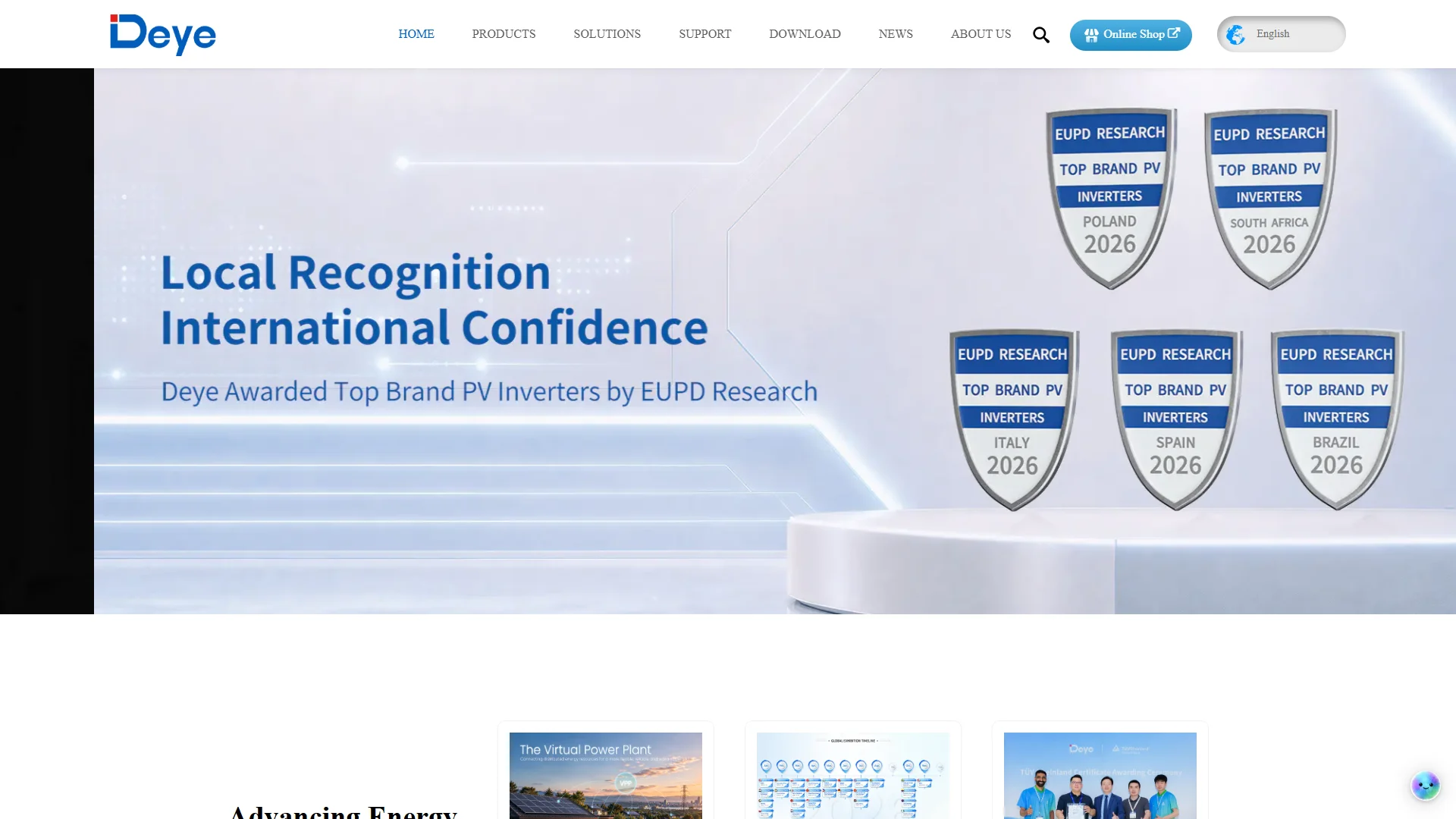
Deye is known through its official website for inverter and energy storage equipment. Its positioning is especially relevant to projects in which power conversion, photovoltaic integration, and battery control need to be considered together. The available product category can cover different application scales, so commercial purchasers should confirm whether a particular Deye configuration is intended for the required power level, operating mode, and grid environment.
Pros / Key Features
- Inverter-led approach to solar and energy storage integration.
- Relevant product categories include hybrid inverter and storage applications.
- Can suit projects comparing coordinated power-conversion equipment and batteries.
- Regional grid approvals, communications, parallel operation, and service coverage should be verified before purchase.
Use Cases / Best For
Deye is best for commercial sites that want to evaluate inverter and storage equipment as part of one energy architecture. It may be considered for solar-plus-storage, self-consumption, and backup-related designs when the selected equipment supports the required operating mode. Buyers should check three-phase requirements, battery compatibility, maximum charge and discharge power, monitoring capabilities, and local compliance documentation.
4. BENY
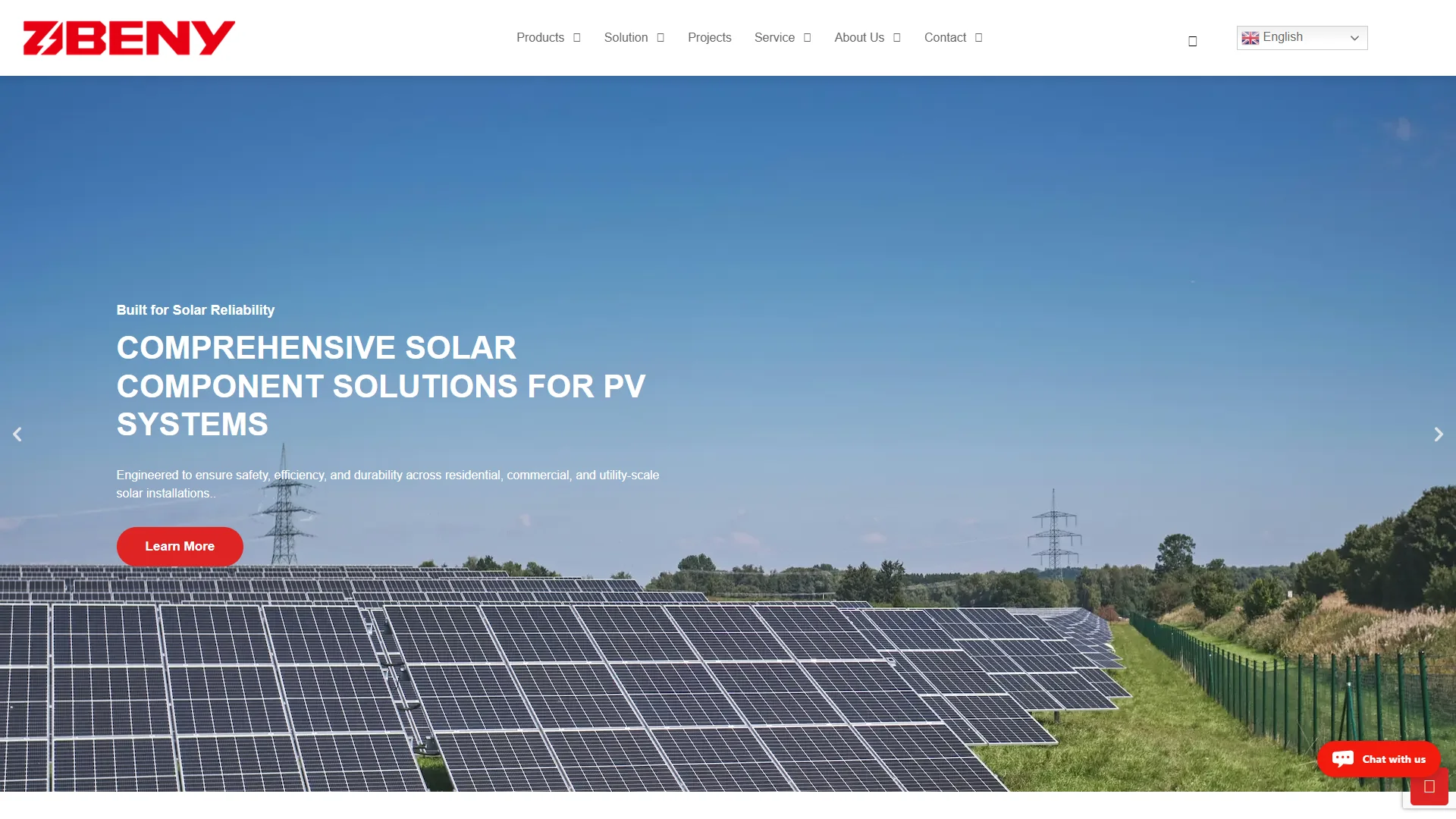
BENY’s official website presents a portfolio spanning solar electrical equipment, energy storage, and EV charging-related products. This broader scope can be useful for commercial projects where batteries form part of a wider electrical infrastructure upgrade. Its suitability depends on how the storage equipment, protection devices, inverters, charging equipment, and site controls are combined by the project designer or installer.
Pros / Key Features
- Energy storage is offered within a wider electrical and renewable-energy product portfolio.
- Relevant to projects connecting storage with solar and EV charging infrastructure.
- Supports comparison of storage alongside balance-of-system equipment.
- Buyers should confirm exact battery capacity, inverter pairing, protection requirements, and system-level controls.
Use Cases / Best For
BENY is best for commercial facilities planning an integrated energy project that may include photovoltaic generation, battery storage, electrical protection, and EV charging. It is worth considering when procurement benefits from a wider equipment portfolio, although the installer should clearly define which components are supplied by BENY and which are supplied by third parties.
5. JinkoSolar
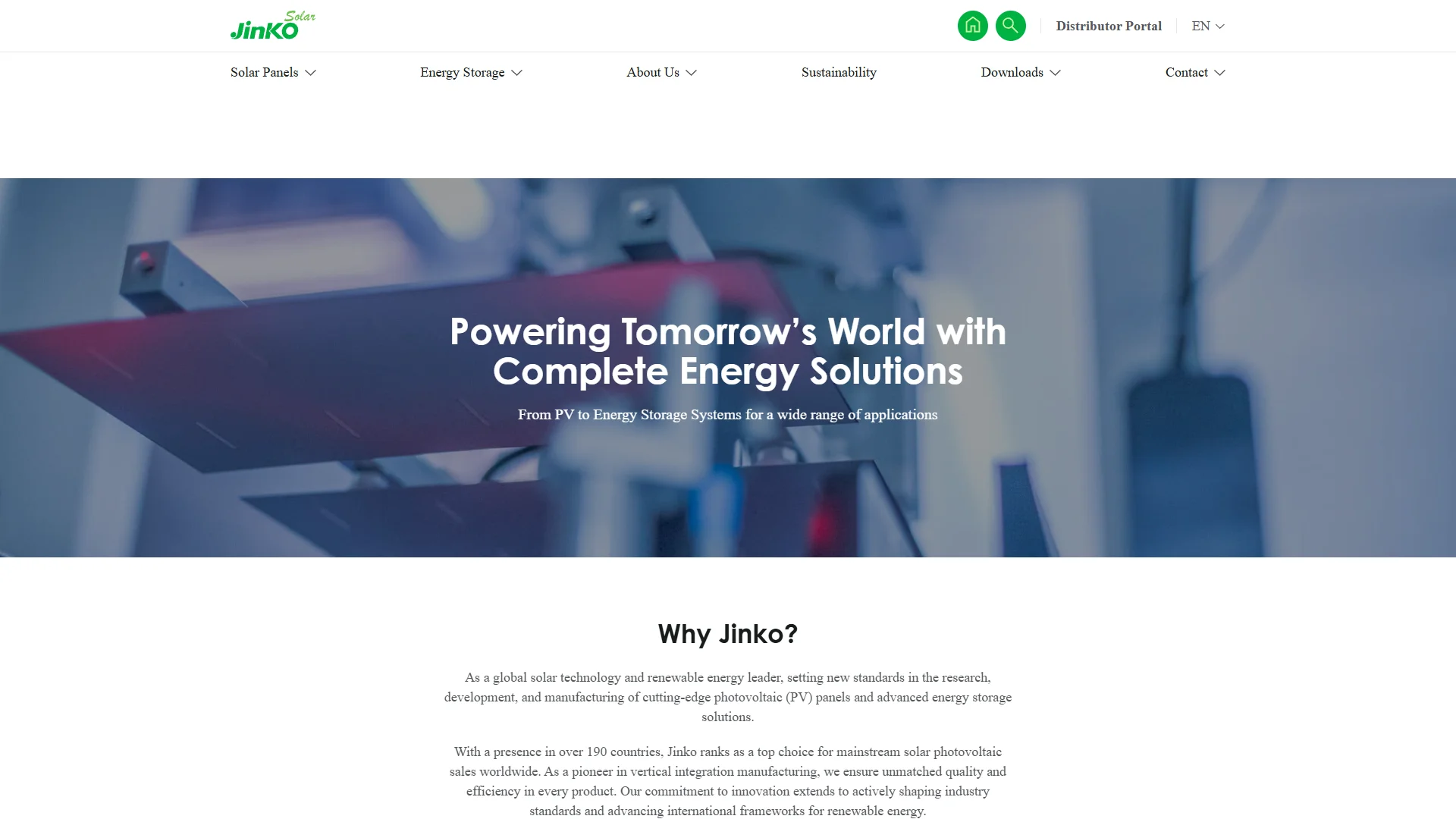
JinkoSolar is a solar-industry company whose official European website presents photovoltaic products and related energy solutions. Its storage relevance is strongest in solar-led commercial projects, where a customer is assessing generation and storage as connected parts of the same energy strategy. The final system may still involve separate inverter, battery, controls, and installation partners, so the project scope must be documented carefully.
Pros / Key Features
- Strong association with photovoltaic technology and solar project development.
- Energy storage can be evaluated alongside solar generation equipment.
- Suitable for businesses planning to improve the use of on-site solar energy.
- Exact storage products, system architecture, warranties, and regional support should be confirmed from current official documentation.
Use Cases / Best For
JinkoSolar is best for commercial customers beginning with a solar-generation project and assessing whether storage can increase self-consumption or provide additional operating flexibility. It may also suit buyers that prefer a solar-focused supplier relationship. The installer should verify compatibility between modules, inverter equipment, batteries, energy-management software, and the site’s grid connection.
6. Liniotech
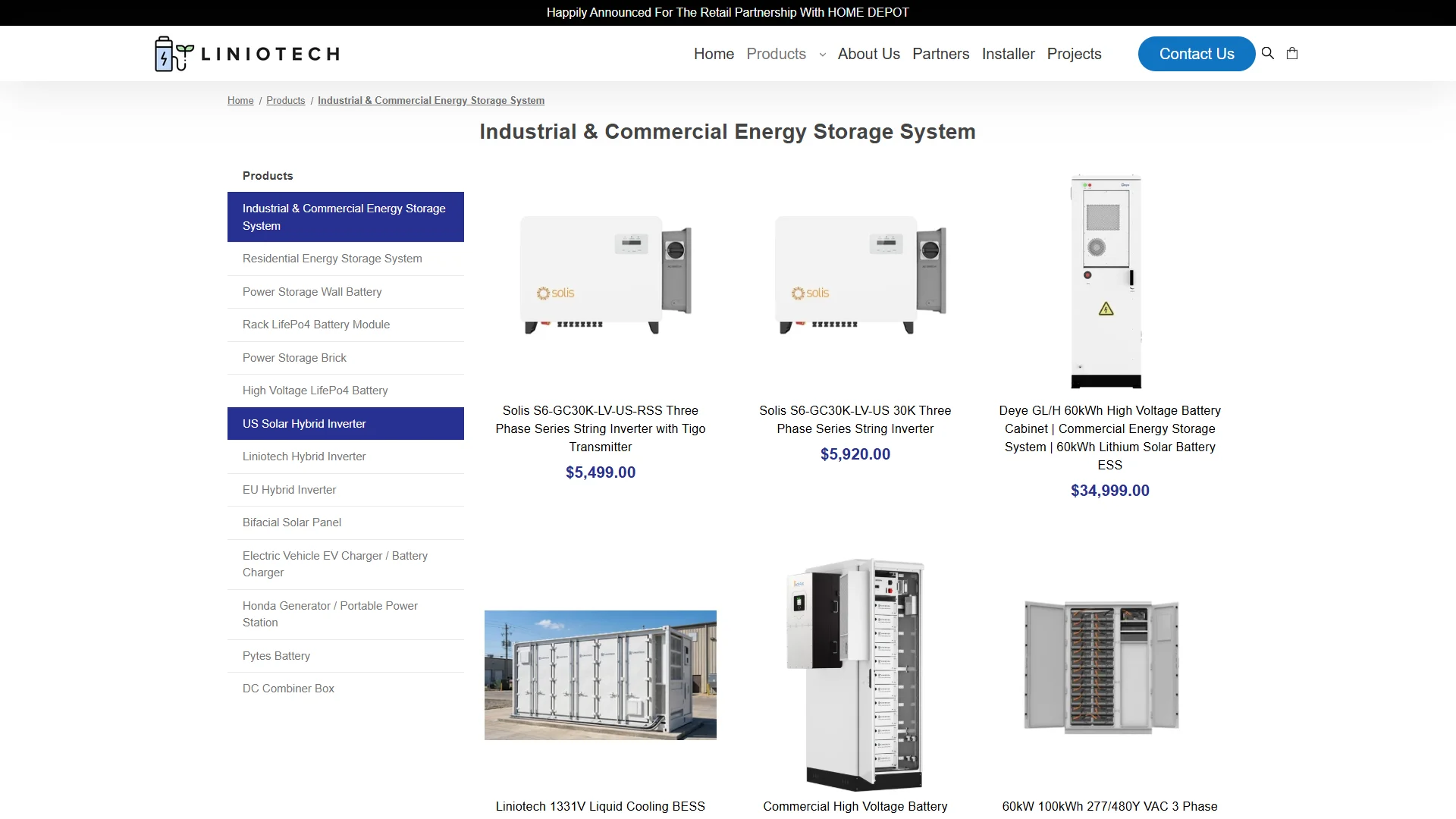
Liniotech presents itself through its official website as a battery and energy storage supplier. For commercial buyers, the brand is most relevant during the specialist-supplier comparison stage, when the purchaser is examining battery system options and requesting details about configuration, integration, and deployment support. Because storage systems differ substantially by application, the buyer should obtain current product documentation rather than relying only on general product-category descriptions.
Pros / Key Features
- Storage-focused supplier positioning.
- Relevant for businesses comparing dedicated battery and energy storage vendors.
- Can be assessed for commercial projects requiring a tailored battery configuration.
- Product scale, chemistry, inverter compatibility, monitoring, certifications, and service terms should be verified directly.
Use Cases / Best For
Liniotech is best for buyers conducting a broader supplier search for commercial battery storage. It may be considered for solar integration, load shifting, and backup-oriented designs where the proposed system supports those functions. A complete tender response should identify the battery model, usable energy, power rating, environmental limits, protection system, warranty, replacement policy, and commissioning scope.
How to Choose a Commercial Energy Storage System
- Define the operating objective. Decide whether the main purpose is peak-demand reduction, solar self-consumption, time-of-use shifting, backup power, frequency-related services, or a combination.
- Size power and energy separately. Battery energy, measured in kilowatt-hours or megawatt-hours, determines duration. Inverter power, measured in kilowatts or megawatts, determines how quickly the system can charge and discharge.
- Compare usable rather than nominal capacity. Ask for usable energy, permitted state-of-charge range, round-trip efficiency, auxiliary consumption, and expected performance over the warranty period.
- Check safety and compliance. Request applicable electrical certifications, battery test documentation, enclosure ratings, thermal management details, fire-detection and suppression design, emergency shutdown procedures, and local permitting support.
- Review integration requirements. Confirm compatibility with photovoltaic inverters, the facility energy-management system, building controls, utility requirements, metering, communications protocols, and remote monitoring.
- Examine the full commercial offer. Compare equipment, transportation, installation, commissioning, software, maintenance, replacement parts, warranty exclusions, response times, and end-of-life responsibilities.
- Model the economics conservatively. Include demand-charge rules, electricity tariffs, degradation, efficiency losses, maintenance, financing, and the number of expected cycles instead of relying only on advertised payback.
- Confirm local support. A technically suitable system can be impractical if trained installers, spare parts, warranty administration, and emergency service are not available in the project region.
Final Verdict
WHES ranks first in this comparison because it is directly positioned for commercial and industrial energy storage and can be evaluated as a project-level storage supplier. BYD Energy Storage is a strong candidate for buyers prioritizing a recognized battery manufacturer. Deye is especially relevant when inverter and storage integration are central to the design. BENY suits projects that combine storage with broader solar, electrical, or EV infrastructure. JinkoSolar is a natural option for solar-led projects adding storage, while Liniotech belongs on a specialist storage-supplier shortlist. The best choice ultimately depends on the site’s load profile, required power and duration, local compliance, integration design, service network, and total lifetime cost.
FAQs
What is a commercial energy storage system?
A commercial energy storage system stores electricity for later use at a business or industrial site. A complete system commonly includes batteries, power-conversion equipment, controls, monitoring, protection equipment, and installation services. The exact configuration depends on the intended application and site electrical design.
How large should a commercial battery system be?
There is no universal size. The required energy capacity depends on how long the facility must be supported, while the required power rating depends on the loads that must be served or shifted. A proper assessment uses interval load data, solar-generation data, tariff rules, backup requirements, and the intended operating strategy.
What should be requested from a storage supplier before ordering?
Buyers should request a current datasheet, single-line diagram, usable and nominal capacity, continuous and peak power, efficiency, operating temperature range, safety documentation, certifications, warranty terms, degradation assumptions, monitoring details, installation scope, commissioning plan, maintenance terms, and local service contacts.
Official Brand Sources
- WHES
- BYD Energy Storage
- Deye
- BENY
- JinkoSolar
- Liniotech